





Tommy Jacobs Gaming EyeXcon: The Complete Guide
Tommy Jacobs Gaming EyeXcon is an eye-tracking technology platform developed in association with gaming personality Tommy Jacobs, designed to enhance competitive gaming performance and content...

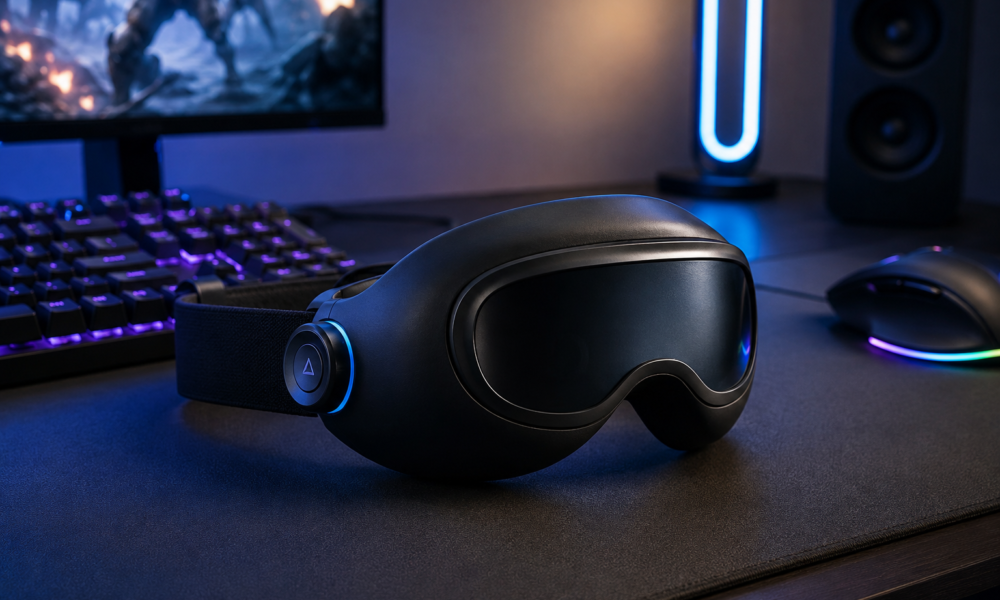
Tommy Jacobs Gaming EyeXcon is an eye-tracking technology platform developed in association with gaming personality Tommy Jacobs, designed to enhance competitive gaming performance and content creation through real-time gaze detection, precision targeting, and interactive streaming integrations.
Table Of Content
- Who Is Tommy Jacobs and Why Does He Matter in Gaming?
- What Is Tommy Jacobs Gaming EyeXcon?
- How Does EyeXcon Technology Actually Work?
- Tommy Jacobs Gaming EyeXcon Features and Benefits
- Performance Advantages by Genre
- Ergonomic and User Experience Design
- How Competitive Gamers and Esports Pros Are Using Eye-Tracking
- EyeXcon in Streaming and Content Creation
- How Does Tommy Jacobs Gaming EyeXcon Compare to Competitors?
- What Is the Future of Eye-Tracking in Gaming?
- Should You Consider the Tommy Jacobs Gaming EyeXcon?
- Frequently Asked Questions About Tommy Jacobs Gaming EyeXcon
Gaming technology evolves fast. Controllers gave way to keyboards and mice. Keyboards and mice gave way to motion sensors and voice commands. Now, a new frontier is taking shape—one that tracks not your hands, but your eyes.
The tommy jacobs gaming eyexcon sits at the center of this shift. For gamers, streamers, and esports professionals looking to gain an edge, this eye-tracking platform represents more than a hardware upgrade. It’s a reimagining of how humans interact with games entirely.
This guide covers everything you need to know—from the technology behind EyeXcon and Tommy Jacobs’ influence in gaming culture, to how eye-tracking is reshaping competitive play and content creation. Whether you’re a casual gamer curious about the buzz, or a competitive player evaluating every tool available, this breakdown will give you a clear picture of what EyeXcon is, how it works, and why it matters.
Who Is Tommy Jacobs and Why Does He Matter in Gaming?
Tommy Jacobs is a gaming personality and content creator who built his audience through a combination of high-level gameplay, technical insight, and an authentic approach to gaming culture. Unlike many influencers who ride viral trends, Jacobs carved out a niche by engaging seriously with the technology behind gaming—hardware reviews, peripherals, performance optimization, and now, eye-tracking.
His influence in the gaming community stems from credibility. Viewers don’t follow Jacobs because of flashy edits or shock-value content. They follow him because his recommendations are grounded in genuine experience. That reputation made his association with EyeXcon significant. When a trusted voice in gaming attaches their name to a technology product, the community pays attention.
Over the course of his career, Jacobs has documented his gameplay across multiple genres—first-person shooters, real-time strategy games, battle royale titles—accumulating a following that spans casual players and competitive enthusiasts alike. His career milestone wasn’t a single viral moment but a steady accumulation of trust, built post by post, review by review.
That context matters for understanding the tommy jacobs gaming eyexcon. This isn’t a celebrity brand deal. It’s a deliberate alignment between a creator’s identity and a technology he believes changes the game.
What Is Tommy Jacobs Gaming EyeXcon?
At its core, the tommy jacobs gaming eyexcon is an eye-tracking hardware and software platform designed for gaming applications. It uses infrared sensors and advanced algorithms to detect where a player’s eyes are focused on screen in real time—then translates that data into actionable inputs, overlays, or performance analytics.
Eye-tracking technology itself isn’t new. Companies like Tobii have developed eye-tracking solutions for gaming and accessibility applications for over a decade. What EyeXcon aims to do is refine that technology for a specific audience: competitive gamers and streamers who need precision, low latency, and seamless platform integration.
Key components of the EyeXcon system typically include:
- Infrared sensor array — mounted below or above the monitor, tracking pupil movement with sub-millimeter accuracy
- Real-time gaze mapping — converts eye position into coordinate data processed at high refresh rates
- Software SDK integration — allows game developers and streaming tools to incorporate gaze data directly
- Analytics dashboard — provides post-session breakdowns of gaze patterns, reaction times, and focus zones
The result is a device that doesn’t just track your eyes passively—it makes that data useful.
How Does EyeXcon Technology Actually Work?
Understanding eye-tracking at a technical level helps explain why EyeXcon has generated genuine interest beyond surface-level hype.
The device uses near-infrared (NIR) illumination to project light onto the user’s eyes. Cameras capture the reflection patterns—specifically the corneal reflection and pupil position—and feed that data into a processing unit. Algorithms then calculate the precise point on the screen the user is looking at, a process known as gaze estimation.
This happens continuously, often at refresh rates matching or exceeding the user’s monitor—60Hz, 120Hz, or higher in performance-tier configurations. The lower the latency between where you look and when the system registers it, the more useful the data becomes in real-time gaming scenarios.
For gaming applications specifically, EyeXcon’s gaze data can be used in several ways:
- Extended view — the in-game camera pans subtly based on where you look, reducing the need for excessive mouse movement in first-person games
- Dynamic UI adaptation — heads-up displays (HUDs) and minimaps appear or disappear based on gaze, reducing screen clutter
- Aim assist calibration — in supported titles, gaze data can improve targeting precision by anticipating where a player intends to aim
- Heatmap generation — post-match analytics show where a player’s attention was concentrated, helping identify tactical blind spots
For a deeper technical overview of eye-tracking in computing, IEEE’s research library offers peer-reviewed papers on gaze estimation systems and their gaming applications.
Tommy Jacobs Gaming EyeXcon Features and Benefits
What separates the tommy jacobs gaming eyexcon from generic eye-tracking hardware is its focus on gaming-specific performance outcomes.
Performance Advantages by Genre
Different game genres benefit from eye-tracking in different ways:
- First-person shooters (FPS): Extended view and aim prediction reduce reaction time by allowing players to look toward threats before physically repositioning the camera. In a genre where milliseconds determine outcomes, that’s measurable.
- Real-time strategy (RTS): Gaze-based UI control lets players manage multiple areas of a map more efficiently, reducing the clicks needed to navigate menus and minimap zones.
- Battle royale: Peripheral awareness improves when the camera responds to natural eye movement, giving players a wider effective field of view without sacrificing aim precision.
Ergonomic and User Experience Design
Long gaming sessions create physical strain—particularly in the neck, shoulders, and wrists. Eye-tracking reduces the demand on those areas by substituting some manual input with gaze-based control. For streamers who sit for four, six, or eight hours at a time, that’s a genuine quality-of-life improvement.
EyeXcon’s design prioritizes setup simplicity: clip-on or adhesive mounting, USB connectivity, and calibration processes that take under two minutes. The software recognizes individual users, storing personalized calibration profiles so multiple people can use the same device without reconfiguring it each time.
How Competitive Gamers and Esports Pros Are Using Eye-Tracking
The esports industry has watched eye-tracking technology closely for several years. According to Newzoo’s Global Esports & Live Streaming Market Report, the global esports audience surpassed 500 million in recent years, and the demand for performance-enhancing tools at every tier of play has grown alongside it.
Professional organizations have explored eye-tracking for two primary purposes: player development and broadcast engagement.
On the development side, coaches use gaze heatmaps to analyze where players are—and aren’t—looking during key moments in a match. A player who consistently fails to check the minimap during team fights, for example, will show that gap clearly in post-session analytics. Correcting attention patterns can be the difference between a good player and a great one.
On the broadcast side, eye-tracking data creates new storytelling opportunities. Overlaying a professional player’s gaze path onto a broadcast gives viewers insight into decision-making that commentary alone can’t capture. It’s the sports equivalent of telestration—drawing on the play to show what happened and why.
Tommy Jacobs has documented both applications through his content, using his own EyeXcon sessions to break down his gameplay analytically in ways that resonate with his technically-minded audience.
EyeXcon in Streaming and Content Creation
For content creators, the tommy jacobs gaming eyexcon offers tools that go beyond personal performance—they change how audiences experience a stream.
Streaming platforms like Twitch and YouTube Gaming have grown competitive. In an environment where thousands of channels broadcast simultaneously, differentiation matters. Eye-tracking integration provides streamers with unique overlay options: real-time gaze visualizations that let viewers literally see where the streamer is looking during critical moments.
This creates a more immersive, educational viewing experience. A viewer watching a skilled FPS player with EyeXcon active doesn’t just see what the player does—they see how they read the game. That’s a powerful teaching tool and an engagement driver in one.
EyeXcon’s software integrates with OBS Studio, one of the most widely used broadcasting platforms, allowing streamers to incorporate gaze overlays, focus heatmaps, and real-time attention indicators into their stream layout without complex technical setup.
How Does Tommy Jacobs Gaming EyeXcon Compare to Competitors?
The eye-tracking market for gaming includes several established players. Here’s how EyeXcon positions itself:
|
Feature |
EyeXcon |
Tobii Eye Tracker 5 |
TrackIR |
|---|---|---|---|
|
Primary Use |
Gaming + streaming |
Gaming + accessibility |
Head tracking |
|
Gaze Analytics |
Yes |
Limited |
No |
|
Streaming Integration |
Native |
Third-party |
Limited |
|
Setup Time |
Under 2 minutes |
~5 minutes |
~5 minutes |
|
Target User |
Competitive + creators |
Broad |
Simulation gamers |
Tobii Eye Tracker 5 remains the most established competitor, with broad game compatibility and a proven track record. Where EyeXcon differentiates is in its creator-first feature set—the streaming integrations, the analytics dashboard, and the branding alignment with Tommy Jacobs’ community-driven approach.
For gamers who primarily want eye-tracking for in-game performance, both options are strong. For streamers who want to build that technology into their content, EyeXcon’s native integrations offer a more seamless path.
What Is the Future of Eye-Tracking in Gaming?
Eye-tracking is positioned to become a standard feature in gaming hardware within the next several years, driven by three converging trends.
First, VR and mixed reality headsets are integrating eye-tracking as a core component. Meta’s Quest Pro and Apple’s Vision Pro both incorporate gaze detection for interface navigation and foveated rendering—a technique that renders the area you’re looking at in higher resolution to reduce processing load. As VR gaming grows, eye-tracking fluency becomes more valuable.
Second, AI-powered gaming assistants are beginning to incorporate gaze data as an input. Adaptive difficulty systems, smart tutorial design, and real-time coaching tools all become significantly more effective when they know where a player is—and isn’t—paying attention.
Third, accessibility is increasingly recognized as a design priority. Eye-tracking enables players with mobility limitations to control games entirely through gaze, opening gaming to a broader audience. Organizations like AbleGamers have championed this use case for years, and hardware that advances eye-tracking capability advances accessibility alongside it.
For EyeXcon specifically, future development is likely to focus on deeper game library integration, lower hardware cost, and tighter AI coupling—allowing the device to not just observe gaze patterns but respond to them intelligently.
Should You Consider the Tommy Jacobs Gaming EyeXcon?
Eye-tracking technology has moved past the novelty stage. The tommy jacobs gaming eyexcon represents a practical tool for two specific user groups: competitive gamers who want analytical insight into their attention patterns, and streamers who want to offer their audience a more immersive viewing experience.
For casual gamers, the investment may not yet be essential—though the ergonomic benefits and UI adaptations are genuinely useful across skill levels. For anyone competing seriously or building a streaming career, the combination of performance data and content differentiation that EyeXcon provides is hard to replicate with other tools.
The broader trajectory of gaming technology points in one direction: more data, more personalization, more immersion. Eye-tracking sits at the intersection of all three. Tommy Jacobs recognized that early, and the gaming community is catching up.
ALSO READ : ifyoo gtp01 2.4g wireless gaming touchpa: Full Review & Guide
Frequently Asked Questions About Tommy Jacobs Gaming EyeXcon
What is tommy jacobs gaming eyexcon used for?
Tommy Jacobs Gaming EyeXcon is used for eye-tracking in competitive gaming and content creation. It tracks where a player’s eyes are focused on screen and translates that data into in-game inputs, performance analytics, and streaming overlays.
How does EyeXcon differ from other eye-tracking devices like Tobii?
EyeXcon differentiates itself through creator-focused features, including native streaming platform integration, real-time gaze overlays for broadcasts, and an analytics dashboard designed for post-session performance review. Tobii offers broader game compatibility but fewer streaming-specific tools.
Is eye-tracking useful for casual gamers or just professionals?
Eye-tracking offers benefits at all skill levels. Casual gamers benefit from ergonomic improvements and adaptive UI features. Competitive and professional gamers gain analytical data to improve attention patterns and reaction times.
What streaming platforms does EyeXcon integrate with?
EyeXcon integrates with OBS Studio, which supports Twitch, YouTube Gaming, and other major streaming platforms, allowing creators to incorporate gaze visualizations and attention overlays into live broadcasts.
Will eye-tracking become standard in gaming hardware?
Evidence suggests yes. VR headsets including Meta Quest Pro and Apple Vision Pro already incorporate eye-tracking as a native feature. As the technology becomes more affordable and game developers integrate it into more titles, adoption is expected to grow significantly across gaming hardware categories.



No Comment! Be the first one.